الأحد، 7 فبراير 2016


الجمعة، 5 فبراير 2016


الخميس، 4 فبراير 2016
visual Arts: watercolor and doodles: Off to the Races by anthea...
visual Arts: watercolor and doodles: Off to the Races by anthea...: watercolor and doodles: Off to the Races by anthead : hand made 1/1 art book hand stitched binding 9x6 on paper card stock cover cover ...
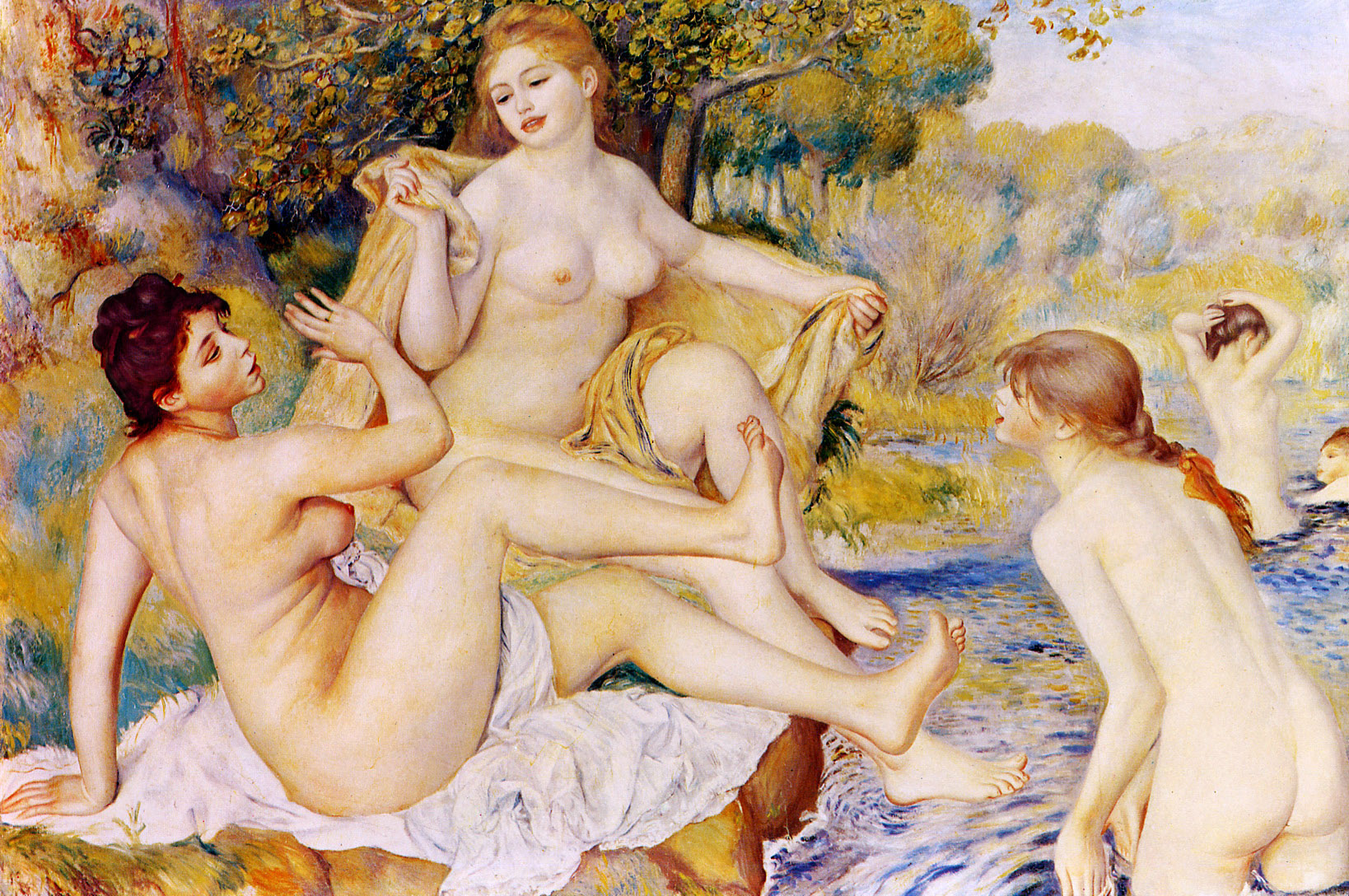
visual Arts: visual Arts: The Bathers – a VoyeurSpectatorments
visual Arts: visual Arts: The Bathers – a VoyeurSpectatorments: visual Arts: The Bathers – a VoyeurSpectatorments : I don’t like Cezanne’s The Bathers (Le Grandes Baigneuses) . Regretfully, I am unable...
visual Arts: “Mi nombre es JUSTYNA KOPANIA, Polonia. Soy pintor...
visual Arts: “Mi nombre es JUSTYNA KOPANIA, Polonia. Soy pintor...: “ Mi nombre es JUSTYNA KOPANIA, Polonia. Soy pintora. El arte es mi asilo, vida, poesía, música, el mejor tabaco, el té más fuerte, tod...
The Transformation of Bacchus

Some of the most interesting works of art are those depicting motion. The attempt to portray a movement in a two-dimensional form of art provides ample room for the artist’s imagination and mimetic faculties. Since the movement – be it a run, jump, leap, fall, or other – cannot be painted while carefully examining a motionless model, the artist must form a mental picture of the motion in his mind and then implant it in the painting or sculpture. Using various means, including body posture, facial expression, straining muscles, clothing angles, an appropriate background, and reference to well-known stories, artists attempt to create an illusion that the painted figure or sculpture is, indeed, moving.
One of the best-known examples of movement in art is Titian’s Bacchus and Ariadne, painted in 1522-1523. It depicts Bacchus, the Greek god of wine and religious ecstasy, leaping towards Ariadne, daughter of Minos, king of Crete. Ariadne has been left on the island of Naxos, deserted by her lover Theseus, whose ship is sailing away to the far left. She is then discovered by Bacchus, who is leading a procession of revellers in a chariot drawn by two cheetahs. He leaps towards her; scholars disagree as to whether he is attempting to save her or has fallen in love with her at first sight. He will later raise her up to heaven and turn her into a constellation, represented by the stars above her head.
The composition is divided diagonally into two triangles: one green-brown, the other blue. In the green-brown triangle we see Bacchus’s bestial followers; the blue triangle portrays the sky, connecting in the right lower corner with Ariadne and her blue dress. And in the middle of the painting is Bacchus in mid-air, leaping from one triangle to the other.
The picture was produced for Alfonso d’Este, the Duke of Ferrara, who requested that it portray Greek and Roman themes and stories, “largely based on the descriptions of lost classical paintings”. This enigmatic request has been the subject of extensive research by art historians. Scholars delved into the writings of Ovid and Catullus to find the precise source of inspiration for this painting.
When I saw the painting at the National Gallery in London, I couldn’t help feeling that there was something odd about Bacchus’s leap. I moved from one side of the painting to the other, hoping that a different angle would provide the right perspective; but in vain. Bacchus’s posture seems to me quite bizarre. His upper body is reclined forward in an unnatural way. One would have expected him to be erect in order to maintain balance when his foot touched the ground. Also, the left arm is pointing backwards, an uncommon movement for a jumping man. The left leg is straight, a posture more typical of pushing than of jumping. And the angle of the red cloth around Bacchus’s body suggests that his upper body was moving in a downward momentum, at a sharp angle to the ground. So was Bacchus jumping upward, forward, or downward?
After many deliberations I came to the conclusion that the only way to explain the strange posture would be to imagine that he is breaking through an invisible screen-like barrier: the upper body is leaning forward to tear it; the leg is straight to support the body while forcefully breaking through it; the momentum, indicated by the red cloth, serves to crack it more easily; and the left hand is pointed backwards probably to make the ripping apart smoother. Even the posture of the head – Bacchus staring at Ariadne’s face – may be seen from this perspective, as also using the head to tear the barrier. Thus, Titian’s mental image was that of a man breaking though something, making a physical effort to tear it and get to the other side.
Following this hypothesis, the question of the nature of the invisible screen is bound to emerge. What was it that stood in Bacchus’s way, passing from the green-brown triangle to the blue one? Why was it so challenging?
The ancient Greek gods Apollo and Bacchus are both Zeus’s sons, though very different in their essence. Apollo is the god of order and reason, of harmony; Bacchus (also known as Dionysus) is the god of the irrational, chaos and ecstasy. The barbaric nature of Bacchus’s followers is very clear in this painting. E. R. Dodds, the masterful classical scholar, describes Bacchus: “he is Lusious, ‘the liberator’ – the god who by very simple means, or by other means not so simple, enables you for a short time to stop being yourself, and thereby sets you free … its psychological function was to satisfy and relieve the impulse to reject responsibility, an impulse that exists in all of us”.
This might explain the invisible obstacle that Bacchus is struggling with. He finds the transformation from an existence devoted merely to satisfying his most vulgar needs – utterly liberated from human responsibilities, almost non-human – to the realm of love and care for Ariadne extremely difficult. Titian understood the complexity of this transformation: he was aware of the barrier that one would need to overcome in order to achieve it.

“Mi nombre es JUSTYNA KOPANIA, Polonia. Soy pintora. El arte es mi
asilo, vida, poesía, música, el mejor tabaco, el té más fuerte, todo. Mi
arte refleja el mundo que percibo con mis sentidos, la gente que
conozco y amo, la naturaleza que admiro y todas las cosas que afectan a
mi forma de ser. El Hombre es mi principal fuente de inspiración y este
Hombre es el tema principal de mi proyecto. Me centro en su psique, sus
actitudes, así como en su apariencia, modales y todos los complejos
procesos que tienen lugar tanto fuera como dentro del Hombre. No me
puedo imaginar la existencia sin mi arte mis pinturas, mis fuentes de
inspiración que es, y será, una parte intrínseca de mi vida.”
watercolor and doodles: Off to the Races by anthead
watercolor and doodles: Off to the Races by anthead: hand made 1/1 art book hand stitched binding 9x6 on paper card stock cover cover back cover


“Mi nombre es JUSTYNA KOPANIA, Polonia. Soy pintora. El arte es mi
asilo, vida, poesía, música, el mejor tabaco, el té más fuerte, todo. Mi
arte refleja el mundo que percibo con mis sentidos, la gente que
conozco y amo, la naturaleza que admiro y todas las cosas que afectan a
mi forma de ser. El Hombre es mi principal fuente de inspiración y este
Hombre es el tema principal de mi proyecto. Me centro en su psique, sus
actitudes, así como en su apariencia, modales y todos los complejos
procesos que tienen lugar tanto fuera como dentro del Hombre. No me
puedo imaginar la existencia sin mi arte mis pinturas, mis fuentes de inspiración que es, y será, una parte intrínseca de mi vida.”
visual Arts: The Bathers – a VoyeurSpectatorments
visual Arts: The Bathers – a VoyeurSpectatorments: I don’t like Cezanne’s The Bathers (Le Grandes Baigneuses) . Regretfully, I am unable to visit the National Gallery often; but...

visual Arts: visual Arts: VISAUL ARTS
visual Arts: visual Arts: VISAUL ARTS: visual Arts: VISAUL ARTS
 Nicole Coulombe, artiste peintre paysagiste expressionniste.
الأربعاء، 3 فبراير 2016


visual Arts: Humour, Hogwash and Insight
visual Arts: Humour, Hogwash and Insight: The delightful Grayson Perry, award-winning artist, cross dressing potter, presents the 2013 BBC Reith Lectures, titled Playing to the G...
Humour, Hogwash and Insight
The delightful Grayson Perry, award-winning artist, cross dressing potter, presents the 2013 BBC Reith Lectures, titled Playing to the Gallery. The lectures are funny, wise, illuminating listening, just the perfect thing to have on while cooking or driving, and gauranteed to fire up your own opinions!
 In these four lectures GP discusses what makes him an artist, the limits of contemporary art, how to gauge the quality of new artworks and the future of the avant-garde. Each lecture lasts about 40 minutes and you can listen to them here. Below is a summary of the lectures in chronological order, although you can listen to any one on its own. Enjoy!
1.Democracy has Bad Taste
Who makes the decisions about what is considered art, who gives art its seal of approval, its validity?
2.Beating the Bounds
Grayson gives us his own list of guiding questions to help answer the big question IS IT ART? You can find a summary of these questions on the site page But is it Art?
3.Nice Rebellion, Welcome in!
Does art need to be revolutionary, is there anything new left to do?
4.I Found Myself in the Art World
Grayson looks at his own role in the art world and tells his personal story.
visual Arts: visual Arts: Turning the pages
visual Arts: visual Arts: Turning the pages: visual Arts: Turning the pages : A stack of extended essays is piled high on my desk..this is my reading this month. I try to pace myself, r...
The Mystery of Creativity

That Elusive State
At this time of year, when the nights are long and my work obligations are less, I am able to spend more time in my painting studio. In theory, this should mean that I'm enjoying full creative flow, churning out the work, but alas, this is not always the case. There are good days, and less good days, and even some very bad days. I heard the author Elizabeth Gilbert describe creative work as similar to trudging around an enormous airport: we walk and walk, lugging our baggage through endless hallways, and every now and then we encounter one of those automatic walkways and for a few magical moments we are swept along, light-footed, dazzled, only to step off again as it inevitably ends, and hit the hard ground for more trudging. Sometimes I wonder if that weightless feeling isn't the real prize of creative work, more than any finished product.
Start making something, anything
My own experience got me thinking about our expectations of creative response in our students: Can we really expect these poor students, with 6 different subjects to keep up with, exams, papers, (not to mention being a teenager and all that come with it) to enter the magical art studio and drop into the elusive creative flow state in a 50 minute period? Unlikely, so what to do? The good news is that you don't need to be in a flow state to make art work, you just need to start making stuff and you access creativity much more easily. The way in is through doing, by showing up. First you have to be in the airport, then you just start walking, start drawing, start shaping a hunk of clay, start rearranging some shoes ( as Fischli and Weiss did below) and the brain will find it's own way to creativity.

For your downtime listening pleasure...
There's been a lot of non assisted walkways in my airport lately so I put my headphones on and listened to some ted radio hour talks on creativity while I plod along. I thought I would share some of my favorites with you here. Enjoy listening!
Talk by Elizabeth Gilbert Where does creativity come from?
Writer Elizabeth Gilbert examines the myth of artists as super heros and proposes the idea that all of us have a "genius" in us. Its about hard work and not giving up.
Talk by Charles Limb What does a creative brain look like?
Researcher Charles Limb looks at the brains of improvising musicians and what happens when they are really in the groove.
Ken Robinson's famous talk How do schools kills creativity?
many of you will already be familiar with this seminal 2006 talk that challenges schools to rethink how we educate children and urges educators (and administrators!) to recognize the importance of creativity in the curriculum.
Poet Billy Collins talk When does creativity start and end?
Poet laureate Billy Collins talks about where poetry comes from, with humor and insight in this 12 minute talk
visual Arts: Turning the pages
visual Arts: Turning the pages: A stack of extended essays is piled high on my desk..this is my reading this month. I try to pace myself, reading only a few each day ...
Turning the pages
A stack of extended essays is piled high on my desk..this is my reading this month. I try to pace myself, reading only a few each day so that my approach remains fresh and curious.

Although there are inevitably some essays that disappoint, there are many more delightful surprises this year. Some essays astound with their clear lucid writing, others with the sheer dedication and passion for the chosen topic. I have read engaging essays on topics as diverse as handmade artist books, cult performance art, site specific architectural decoration, Picasso's muses and many more.
The best essays have a very focused research question or topic and thus a real incentive to research; having a clear focus also helps to build up a convincing argument or thesis.
Essays driven by strong personal interest and meaningful contact with an artist, or work of art are often very successful, especially if guided in the early stages by a wise teacher who can help the student to formulate an angle or research question. Supervisors can help to point the student in the direction of appropriate resources and research methods and a good supervisor can make a big difference.
As would be expected, the weakest essays are those without a clear focused topic. Essays with topics that are too broad and general such as “the role of women in art”, or even “the role of women in abstract art” are difficult to build up a convincing argument or point of view. Much better to take a narrow approach such as “Joan Mitchell and Agnes Martin; different approaches to abstract painting in the late 20th century”.
I find It is always beneficial when essays refer to examples of specific artworks, which in turn allow for detailed visual analysis. An essay without these specific examples misses the opportunity for analysis and for using art terminology.
On the whole, it seems that students from schools all over the world are producing mostly high quality essays that show a genuine interest and sensitivity to the visual arts in a broader context.
The Extended Essay teaches so many important skills: not least how to research, structure, and write an essay. If students can succeed at this in high school they will be well prepared for higher education, and for any occasions in their lives when they encounter the need for formal writing skills.
الاشتراك في:
الرسائل (Atom)